


Support through pregnancy, birth and beyond
“Perinatal” simply refers to the time around pregnancy and birth, including the first year after your baby arrives. It’s a time of enormous change physically, emotionally and mentally and sometimes it can feel like a lot to carry.
You don’t have to be struggling to deserve support. Sometimes you simply need somewhere safe to talk, process what you’ve been through and make sense of how you’re feeling.
Whether pregnancy has been more difficult than you imagined, birth didn’t go as planned, or you’re finding the transition into motherhood harder than you expected, you don’t have to navigate it alone.
I understand how complicated this time can feel. Pregnancy, birth and becoming a parent don’t always look the way we imagined they would. Sometimes there is joy alongside fear, gratitude alongside sadness, or love alongside feelings you weren’t expecting.
You deserve a space where you can talk honestly, without judgement, and feel heard.
PERINATAL MENTAL HEALTH
Nobody talks about matrescence
Almost nothing prepares you for matrescence the transition into motherhood. We talk openly about adolescence, that huge shift from being a child to becoming an adult. But we don't talk nearly enough about the equally life changing transition into becoming a mother.
I hadn't even heard the word matrescence until I trained in perinatal mental health. When I learned what it meant, it felt like someone had finally put a name to something I'd been living through without really understanding it.
I understand. Let’s work through it together.
Matrescence is the transition into motherhood a time when your body, hormones, identity, relationships and emotions can all change, sometimes in ways you weren't expecting.
The mother you pictured

You go into motherhood with a picture in your head of the mother you're going to be. I had that picture too.
But mine changed overnight.
Three very premature babies. Fear. Appointments. Uncertainty. A body that seemed stuck in fight or flight. Just when I thought I was beginning to find my feet, there was another appointment, another worry, another thing to process. You become their advocate and their protector. You're constantly watching, listening, making decisions and trying to hold everything together. There's very little time to stop and ask yourself, “How am I actually doing?”
And sometimes, even when your babies are finally home and everyone tells you how lucky you are, you don't feel like yourself anymore.
Because surviving something doesn't mean you've had the chance to process it. Motherhood can bring joy, love and gratitude but it can also bring fear, overwhelm, grief for the experience you thought you'd have, and a version of yourself you weren't prepared to meet.
We need space for that too.
Space to talk.
Space to process.
Space to understand what you've been through.
You don't have to wait until you're struggling to ask for support.
You deserve support too.
"You're on a ship you're keeping afloat, and you just keep going until one day you finally sit still, and it hits you like a ton of bricks: how did I get through that?"
76 days in the NICU
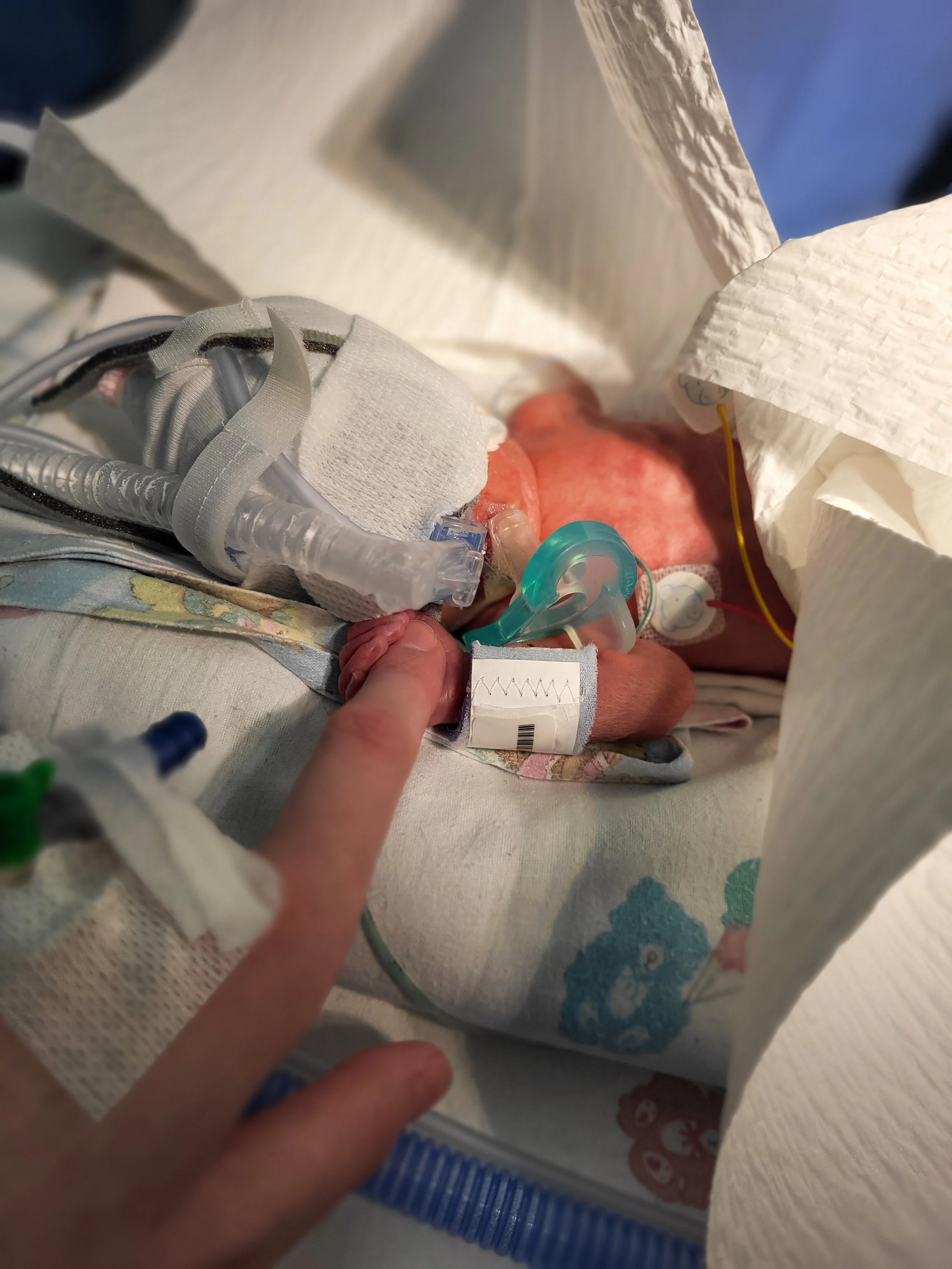
My triplets were born at 29 weeks. Our smallest weighed just 880 grams. They were tiny, incredibly vulnerable, and suddenly our whole world became the NICU a place nobody can truly understand unless they've lived it.
Nothing prepared me for what was ahead.
Every minute of every day, we were watching our babies fight to stay alive. These were our first babies, and I was becoming a mother in an environment I had never imagined. Wires, machines, monitors, consultants, alarms and constant uncertainty. Sometimes you could barely see their little faces beneath everything that was keeping them alive.
You want to hold them. You want to bond with them. You want to feel like their mum. But so much of those early days was about keeping them alive.
And somewhere in all of that, there was no time to think about me.
I am endlessly grateful to the Rotunda for saving my babies' lives. But when you eventually leave the NICU, the noise stops and the support can suddenly stop with it. You're sent home with your babies and expected to find your way into this completely new world of parenthood while still carrying everything you've just been through.
That experience stayed with me. It's why I'm so passionate about supporting parents through life in and after the NICU. I don't think you can fully understand what NICU does to a parent unless you've lived it.
What came after
My journey into matresence
Grounded in knowledge, guided by compassion
I’m an acupuncturist, and alongside my acupuncture training I’ve completed PMHI’s Advanced Perinatal Mental Health Training.
My training has given me a deeper understanding of the emotional and psychological changes that can happen through fertility, pregnancy, birth and early parenthood.
For me, it’s about being able to recognise when there may be more going on beneath the surface when someone comes to see me. It means I can listen, ask questions, understand more of what they may be carrying, and recognise when additional support might be needed.
I’m not a psychiatrist or psychologist, and I don’t diagnose or treat mental health conditions. I’m an acupuncturist who wanted to understand this part of the journey better both because of my own experience and because I wanted to be better equipped to support the people who come through my door.
My training has covered:
Matrescence & the foundations of perinatal mental health
Perinatal anxiety
Perinatal depression
NICU experiences and trauma
Fertility challenges
Miscarriage, loss, stillbirth & pregnancy after loss
The challenges after baby arrives
Birth trauma
Relationship challenges
Additional support
Sometimes talking to someone who understands can make all the difference. I'm here to listen, support you and give you space to talk about what you're experiencing. However, I'm not a counsellor or psychologist, and there may be times when you need more specialised mental health support. When that happens, I believe in making sure you have access to the right person.
Mindful Roots Counselling offers specialist counselling support and is a resource I trust for those who may need a deeper level of emotional or psychological support.
www.mindfulrootscounselling.com
You don't have to manage everything on your own. Asking for extra support is a strength, not a failure.